INTERDISCIPLINARY COURSES
Fakes | Happiness by Design | Knowledge & Expertise | Science Fiction and Hope | Technology, Horror, and the Unknown | Time and Life
DISCIPLINARY COURSES
Research Ethics for Graduate Students | Introduction to Philosophy | Introduction to Philosophy of Science | Introduction to Philosophy of Technology | Introduction to the Sociology of Knowledge | Science, Technology, and Society | Thinking Well
Fakes

In this seminar, students examine various kinds of false appearances such as counterfeits, forgeries, hoaxes, and liars, together with attempts to expose them, often using sophisticated technologies. By critically examining what it means to designate an object, practice or person as 'fake', and how different kinds of fakes are judged as more or less problematic, students will develop the capacity to think critically and relationally about deep-seated human desires for truth and value.
By examining what makes an object, claim, practice or person a "fake", and how the world reacts, judges, gets fooled by or tries to guard against such fakery, we will hone our capacity to think critically and relationally about the significance, role and threat of fakery. Not only that: we will also engage with the flipside of fakes and fakery, that is, how deep-seated human desires for 'truth' and 'authenticity' assert themselves.
The module is organized around the discussion of different kinds of fakes and cases of fakery. By engaging a variety of case studies, we will seek to (1) refine our understanding of fakes and fakery as a general phenomenon, and (2) develop analytical skills that can be transferred to other areas. One such skill relates to analyzing how fakes negotiate their success in the world: how do they slip in and get through, how is the 'content' of the fake matched with the 'context' in which it seeks to succeed, and vice versa? The second skill relates to the balance between belief and skepticism (or trust and suspicion), and the role that expertise, evidence and investigation play in working out – and persuading others of – what is what.
This course was originally conceived by Catelijne Coopmans. I took it over in 2019, and have since adapted it, particularly to address the prevelance of digital technology-enabled fakery and the post-truth condition.
Science Fiction and Hope

This interdisciplinary course involves studying science fiction (SF) as a resource for thinking about the future in Singapore. As existential risks often dominate media imaginations of the future—often accompanied by narratives of coming insecurity, radical change, and uncertainty—the focus of this course is on the possibilities of SF to imagine a better world. Students will explore the history of SF, in Singapore and abroad, the ways SF reveals a society's hopes and fears, and its capacity to imagine hopeful futures and apply what they learn to imagine solutions to contemporary challenges.
I designed this course in 2024, in part to counter the prevalence of dystopian and retrograde imaginations of the future and discourses of impending catastrophe and existential risk.
Knowledge and Expertise

In this seminar, students examine some of the beliefs humans have held about knowledge, and those who are thought to possess it, throughout history, with a particular focus on technological change and the idea of expertise. Through a socio-historical treatment of figures associated with knowledge, students will discuss how experts are created, challenged, and replaced. This module will enable students to critically appreciate various forms of knowledge, to understand the social and historical context in which our current methods and processes for acquiring knowledge are situated, and assess how they shape individual and collective lives and experiences.
This course was previously titled "Technology and the Fate of Knowledge" and developed by me and Axel Gelfert in 2014.
Happiness by Design

What makes a good life? In this course, we will not only consider this question in the abstract but also attempt to put theory into action. This interdisciplinary Communities and Engagement course explores happiness, wellbeing, and flourishing through working with a community partner to make a difference to real-world issues. Drawing on insights and methods from philosophy, psychology, and sociology, we will dig into the big questions of life, meaning, and purpose, as well as examining how societies measure and promote happiness. Through working with our community partner, you will contribute to real research that is shaping community wellbeing programmes in Singapore and develop the skills needed to make an impact, for example, through qualitative research methods and participatory design.
This course was originally conceived by John Wee. I took it over in 2026, and have adapted it, particularly to incorporate some philosophical insights into happiness, including stoicism and utilitarianism.
Time and Life

This course combines the philosophy, sociology, and anthropology of time with historical developments in time-keeping from early technologies such as water clocks through the invention of schedules and time-tables to modern and contemporary issues such as Taylorism and the 'always on' society.
There are few things that impact our lives as much as our sense of time. Singapore is a 'fast-paced' city where deadlines, time-saving apps and fertility clocks shape people's actions and experiences, and where many feel 'time poor', even if they are cash rich. In this module, we examine the ways in which we take time for granted through analysing the ways in which our lives are temporally grounded. We do so particularly through tracing connections between individual experience, social life and technologies such as clocks and watches, electric lighting and the internet. Is time-stress inevitable in this day and age? What does it mean to use one's time well?
This course was conceived by Catelijne Coopmans and Celine Coderey. I co-taught it with them in 2017.
Technology, Horror, and the Unknown

This module will equip students with the analytical tools required to assess and critically examine the history of a major genre in fiction through contextualizing it within societal and technological changes.
Things that go bump in the night can cause a fright. But the genre of horror also reveals our prevailing anxieties, fears, and hopes about technology. From medical laboratories and electrical devices to televisions and social media, horror has been obsessed the uncertain potential of new technologies. We look at how technology is portrayed in fiction and what this tells us about society's attitudes towards technology. Through Asian and Western horror film and pop culture, and combining insights from film studies, philosophy, and science and technology studies, this module will uncover our attempts to grapple with technology and the unknown.
This module equips students with the analytical tools required to assess and critically examine the history of a major genre in fiction through contextualizing it within societal and technological changes.
The central aim of this module is to explore what the horror genre reveals about our relationship to technology. This is achieved by tying together methods and insights from primarily from the disciplines of Science and Technology Studies (STS), Philosophy of Science and Technology, and Film Studies.
Thinking Well

This course helps students develop their ability to think, focus, discern truth from falsehood, and make sound judgments in today’s complex information landscape. Combining theory and practise, it cultivates the habits and dispositions required to thrive intellectually in an era shaped by technology, rapid change, and information overload. Students will learn to analyse their everyday reasoning, reflect on cognitive biases and intellectual habits, pay attention through deep focus, and retain information reliably. Rather than prescribing what to think, this course teaches how to think well! Drawing on philosophy, cognitive psychology, media studies, and human-machine interaction, it takes an interdisciplinary and practise-oriented approach to reasoning and belief-formation in the contemporary world.
In an age of AI-generated content, contested forms of expertise, pervasive misinformation, and tools capable of writing persuasively, our capacity for sound reasoning is especially important. Increasingly, cognitive labour is outsourced to digital systems and, while this offers opportunities for enhancement, it also demands stronger habits of attention, judgment, and reflection. Just as modern sedentary life has required intentional exercise for physical health, this era requires deliberate cultivation of cognitive fitness. “Thinking Well” provides structured practise in reasoning, attention, memory, and epistemic character.
Research Ethics for Graduate Students

This course, compulsory for all PhD students in NUS, introduces the learner to ethical issues in research. It provides an in-depth analysis of core topics, namely data management, publication practices, authorship criteria and responsibilities, research integrity, misconduct, questionable research practices, and conflicts of interest. Learners will be allowed to choose two elective topics based on their research needs. A case-study approach will serve as the basis for in-depth analysis. Each topic emphasizes the importance of promoting ethical conduct in research. A blended learning 2.0 pedagogical approach (BL2.0) involving synchronous and asynchronous learning activities will be adopted.
I co-designed this course with colleagues from the NUS Graduate School, School of Computing, and Centre for English Language Communication. I also teach the components Ethical Decision-Making and Human-Machine Ethics.
Introduction to Philosophy of Technology
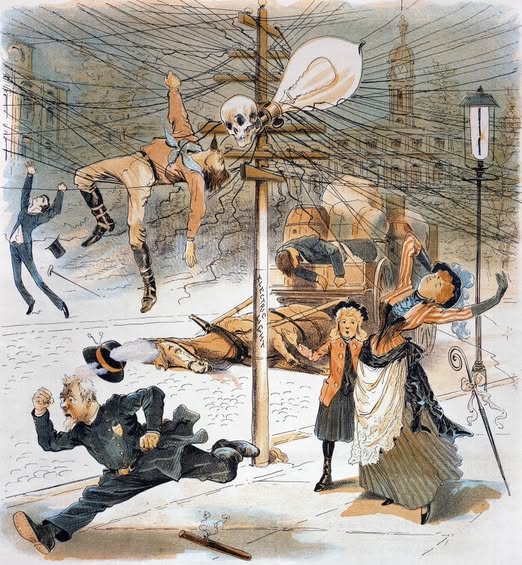
This module looks at the philosophical problems arising from technology and its relation to nature and human values. In doing so, it draws on a number of philosophical approaches and traditions. Among the topics to be discussed are the relation between science and technology, the way technology has shaped our perception of nature and human experience, and the ethical challenges posed by technological progress. Potential topics to be discussed will include the concept of risk, issues in environmental ethics, and social-epistemological problems arising from communication technology.
Introduction to Philosophy of Science

This module explores philosophical questions concerning the foundations and methods of the natural sciences as well as their relation to broader society, policy-making, and ethics. We ask questions such as: What is science? Do scientific theories provide us with truths? Is there a meaningful distinction between science and so-called pseudoscience? What is scientific method? Should scientific experts make policy decisions? We will also discuss the role of observation, experience, inference, realism, conjecture and refutation, explanation, and confirmation in science.
Introduction to Philosophy

This course offers a broad introduction to philosophy through sustained engagement with some of the most enduring and influential questions. Students will examine fundamental issues concerning knowledge, reality, ethics, the self, meaning, and social life, asking, for example: What can we know? What is real? What makes an action right or wrong? What is a good life?
Introduction to the Sociology of Knowledge

This course introduces students to the study of how social conditions shape what is taken to be knowledge, truth, and rationality. It examines the ways in which ideas, beliefs, and systems of knowledge are produced, circulated, organised, validated, and contested within historical, cultural, and institutional contexts. Students will engage with key theorists such as Karl Mannheim, Émile Durkheim, and Max Weber, alongside later and contemporary approaches including phenomenology, feminist epistemology, the Strong Programme, and Actor-Network Theory. Topics include ideology and social location, expertise and authority, scientific knowledge and objectivity, and classification and categorisation. By the end of the course, students will have developed a critical sociological perspective on knowledge, an understanding of key debates in the field, and the analytical tools needed to examine knowledge as a social phenomenon with real-world consequences.
Science, Technology, and Society

This course introduces students to Science and Technology Studies (STS), an interdisciplinary field that examines how scientific knowledge and technological systems are produced, shaped, and contested within social, cultural, and historical contexts. The course explores the co-production of science and technology with social values, institutions, and power relations. Students will learn key concepts and approaches in STS including the social construction of scientific knowledge, actor-network theory, feminist critiques of science and theories of public participation and innovation.